

Margriet van Breevoort
Margriet van Breevoort
A Conversation with Margriet van Breevoort
TEXT BY Andrea Dávila
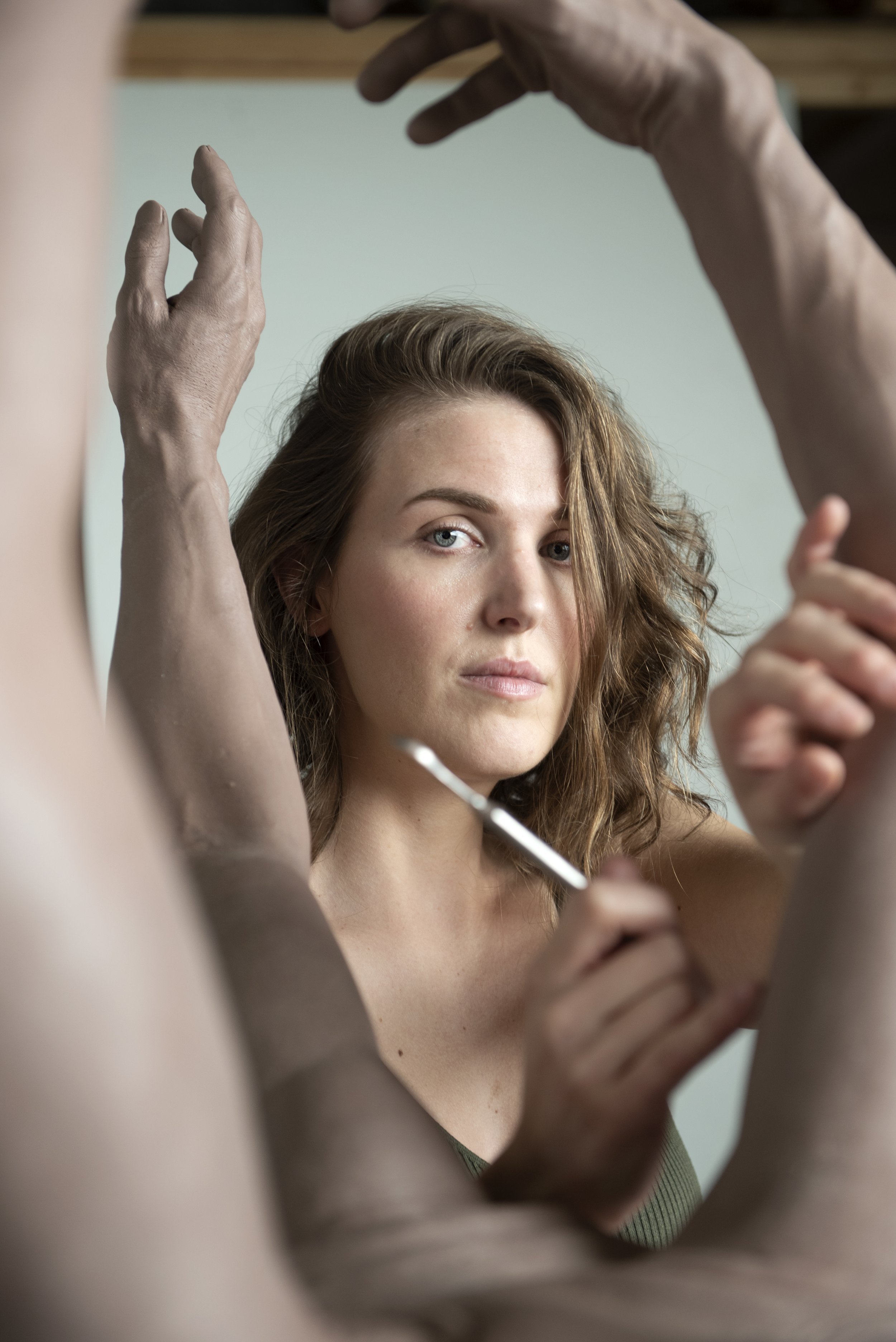
Portrait of the artist.
The world of Margriet van Breevoort is truly singular.
Through hyper-realistic sculptural techniques, her artworks illustrate the consequences of forcing Nature into a state of efficiency: hybrid beings that incorporate bodily elements, both human and animal, exploring the boundaries of what can be considered natural and artificial.
When Nature itself has become tailored to human desires and demands, Van Breevoort argues that the dividing line between Man and Nature is wholly imaginary: ‘we’ve created all these dividing words – this language and this hierarchy to make sense of this world – but, in reality, aren’t we also part of Nature?’.
Writer Andrea Dávila interviewed the artist on her relationship with the body as a source of inspiration, the labour-intensive sculpting process behind her artworks, and how she makes imagined life forms a visualised reality.

Totem for mankind, 2021. Silicone, polyurethane foam, 180 x 40 x 40 cm. Photo credit: Tommy Smits.
I understand your artworks often reference personal experiences and memories, and offer a visual rendition of an emotion or feeling. How do you maintain a record of your ideas? And when do you decide to develop an idea into an artwork?
Most artists draw inspiration from their own personal experiences and feelings. When an idea resonates with my interests, I write it down in a notebook, I make a very rough sketch of the artwork, and once I have this collection of ideas, I find one that has a connection between the concepts I am exploring and my older work.
If the idea feels like it matches and embodies the world I am trying to create, then it’s something I develop, but it’s still a hard decision to decide what will turn out good and what will not, because it doesn’t always turn out the way you think. It’s really hard to translate it into something real.
Are you thinking about a specific work that surprised you?
Yes, there is one that disappointed me. For one of my recent works, I had this vision of a monumental sculpture [...] and I had this idea of a symbiotic relation. The feeling I had at the time does not really translate into this sculpture. And it’s been a real pain to make for me; the whole mould-making process costs so much money, and it just doesn’t do what I wanted it to do.
Speaking of your reaction to your own work, what response do your artworks produce in yourself? And does this response change from the moment you first create a piece to the moment you revisit it some time later?
Yes, it does: there’s a very labour-intensive and time-consuming mould-making process, and so after it’s finished, it’s really hard to distance myself enough to see the work really come alive. At first, I still see every tiny detail and tiny mistake, and only after some time am I more able to see the work as a whole and feel a connection to it.
I really enjoy these moments when I’m adding the final touches – like adding the eyes or the final layers of paint – and the piece comes together. This is the moment that I get to see what I’ve been making all these months.
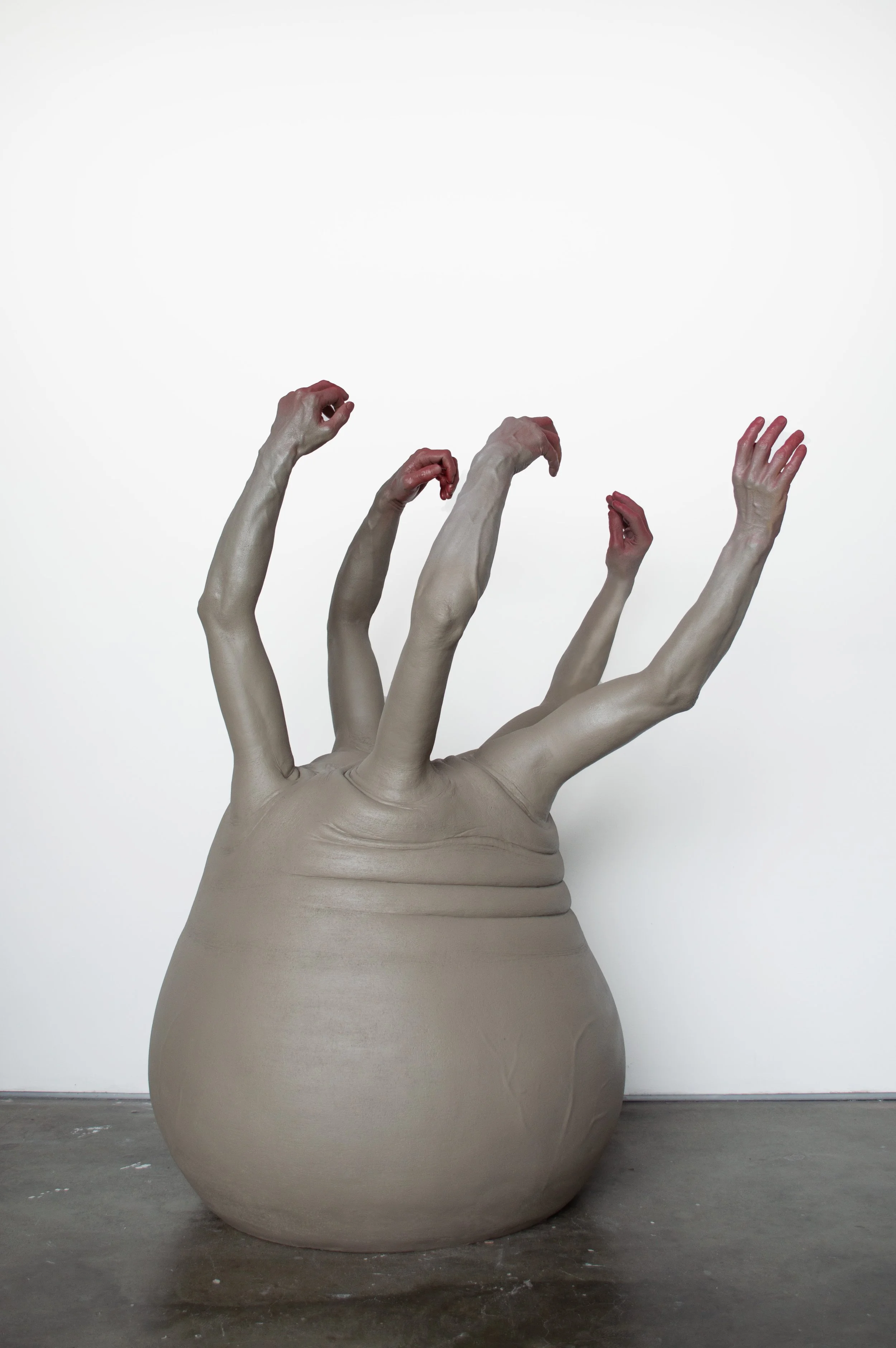
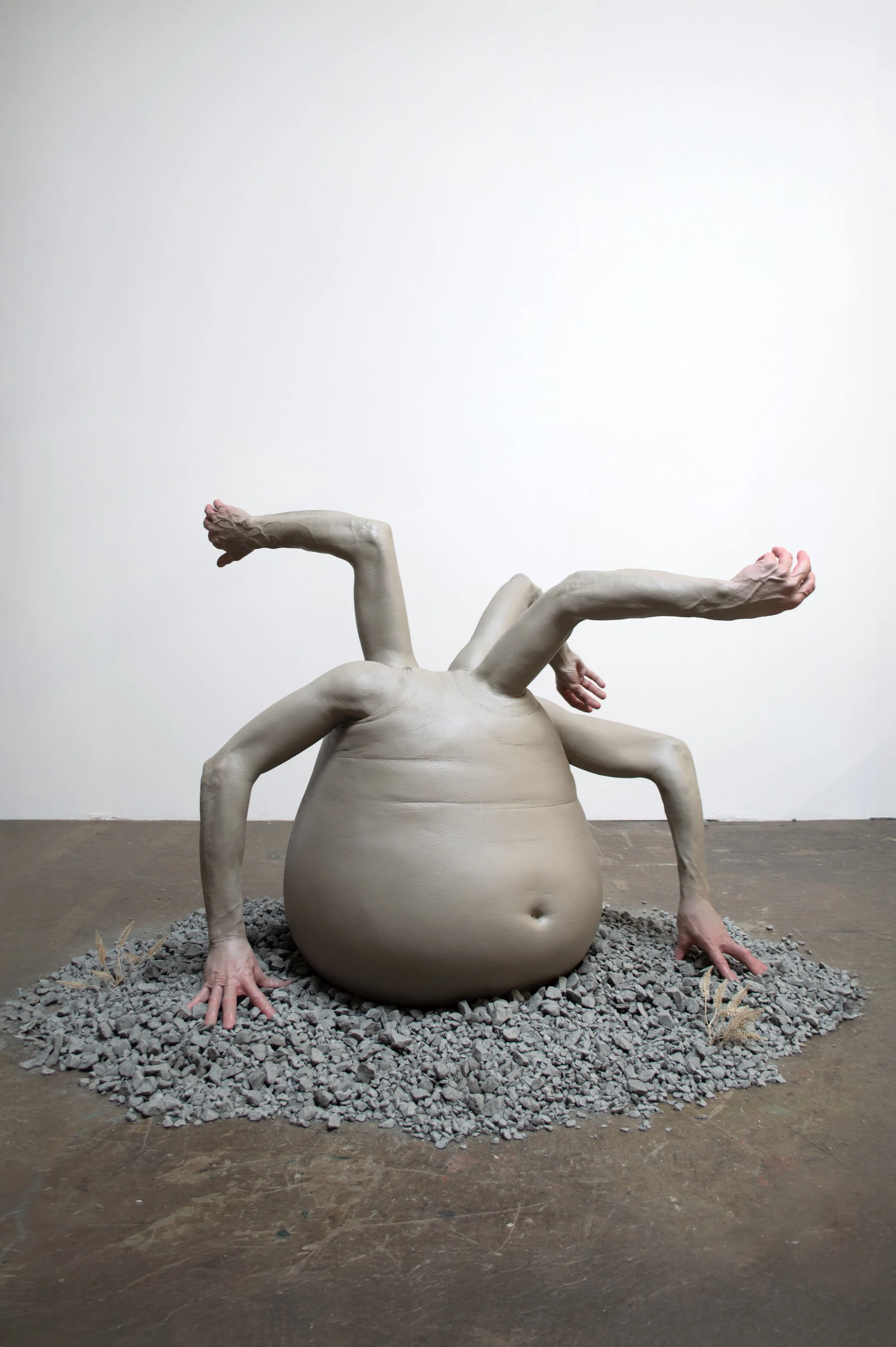
LEFT: Reaching nexus, 2025. PU resin, PU foam, epoxy, 150 x 90 x 110 cm. Photo courtesy of the artist. RIGHT: Symbiotic growth, 2025. PU resin, PU foam, epoxy, 90 x 70 x 80 cm. Courtesy of the artist.
Considering you work with materials that intentionally mimic skin and organic parts of the body, do you need a degree of separation between yourself and what you are making? Or do you feel comfortable working with materials that are meant to mimic live, organic beings?
I am not really comfortable during the making process. I really don’t like body horror movies and everything. I don’t know why [body horror] is very uncomfortable for me. I like the concept, I’m very fascinated by it, and I want to be able to see it, but I feel like throwing up whenever I watch it.
“MY WORK FEELS MUCH MORE LIKE I’M CREATING MY OWN CHILDREN OR I’M LIKE DR. Frankenstein: I’m making my own creatures.”
But my work feels much more like I’m creating my own children or I’m like Dr. Frankenstein: I’m making my own creatures. And it really helps that I’m invested in every tiny detail. Because of this focus, it is harder for me to feel some disgust or fear for all of the [skin] folds. I have this attention to the material and the texture and form, and it creates this distance I talked about earlier. It’s similar to when you are drawing nude models: at some point, you don’t see the nudity anymore, but you only see the shapes and forms.
So, if you focus on the detail of the body part you are trying to refine, you forget that you’re working with bodies.
Yes, something like that, because I also know exactly how everything was made, I did it with my own hands. There’s no fear at all.
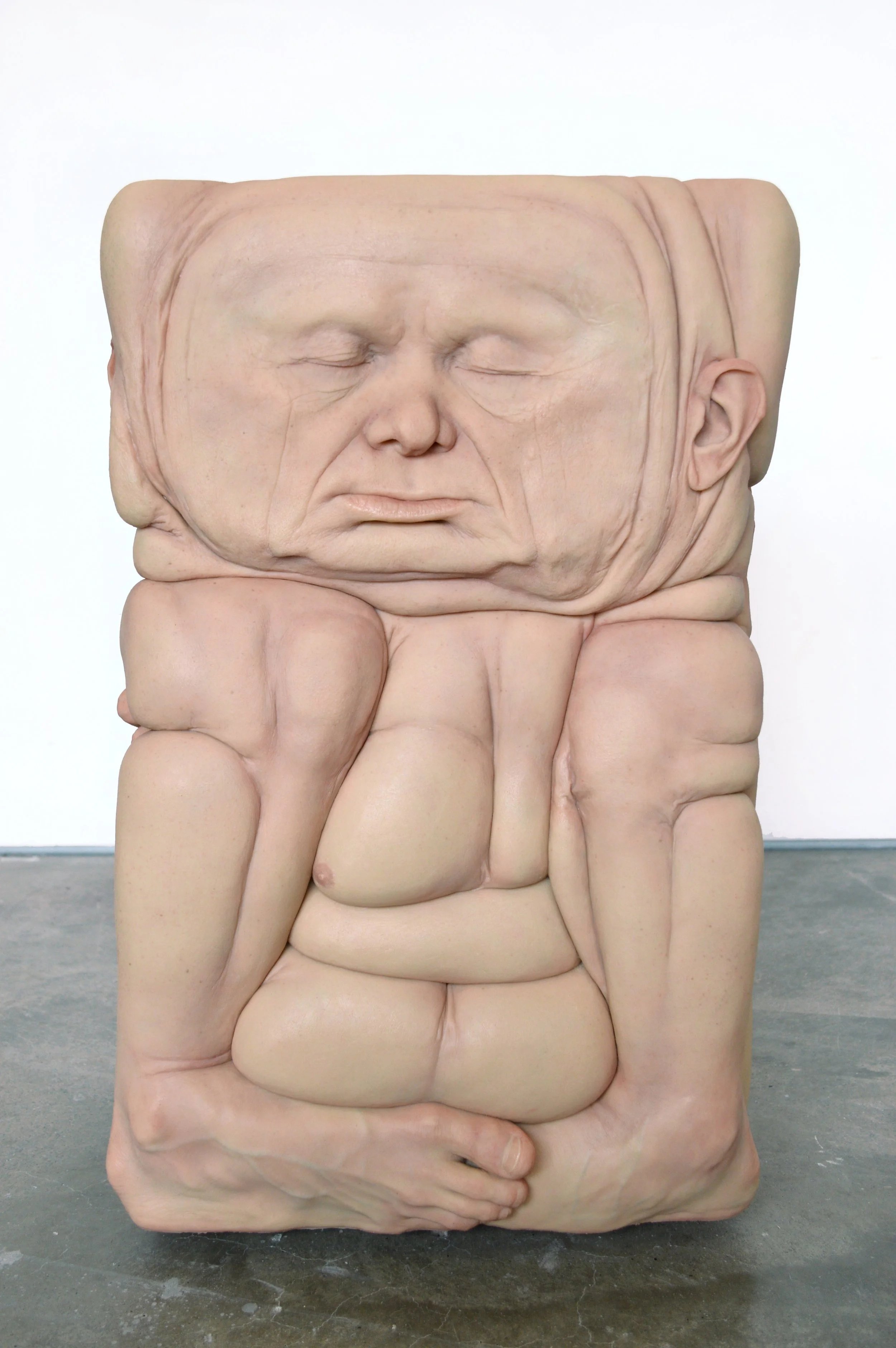
Totem for mankind, 2021. Silicone, polyurethane foam, 180 x 40 x 40 cm. Photo credit: Tommy Smits.
Given that many of your pieces utilise elements of the human body, there is inevitably a sense of recognition between the viewer and your artwork – an artwork which retains human characteristics whilst also being just beyond human. Is this sensation of strange self-identification intentional? And how do you think about human and animal bodies in relation to your sculptures – as fragmented forms or as wholes ready to be taken apart?
It’s essential for the viewer to recognise these elements of human characteristics so they feel connected, and creating this attraction and familiarity is a very important aspect of my work. I try to mislead the viewer by twisting these elements into something new and strange that seems to be real, but it cannot really be.
The body is a good starting point and visual language for sculpture because it carries a lot of layered meanings and feelings for people. Nudity has this repulsiveness, but is also very vulnerable, and really triggers people because most of our wrinkles and our [skin] folds are hidden beneath clothes. I can use these elements of the body as building blocks to sculpt new forms, and grab people’s attention to get a message across in an accessible way.
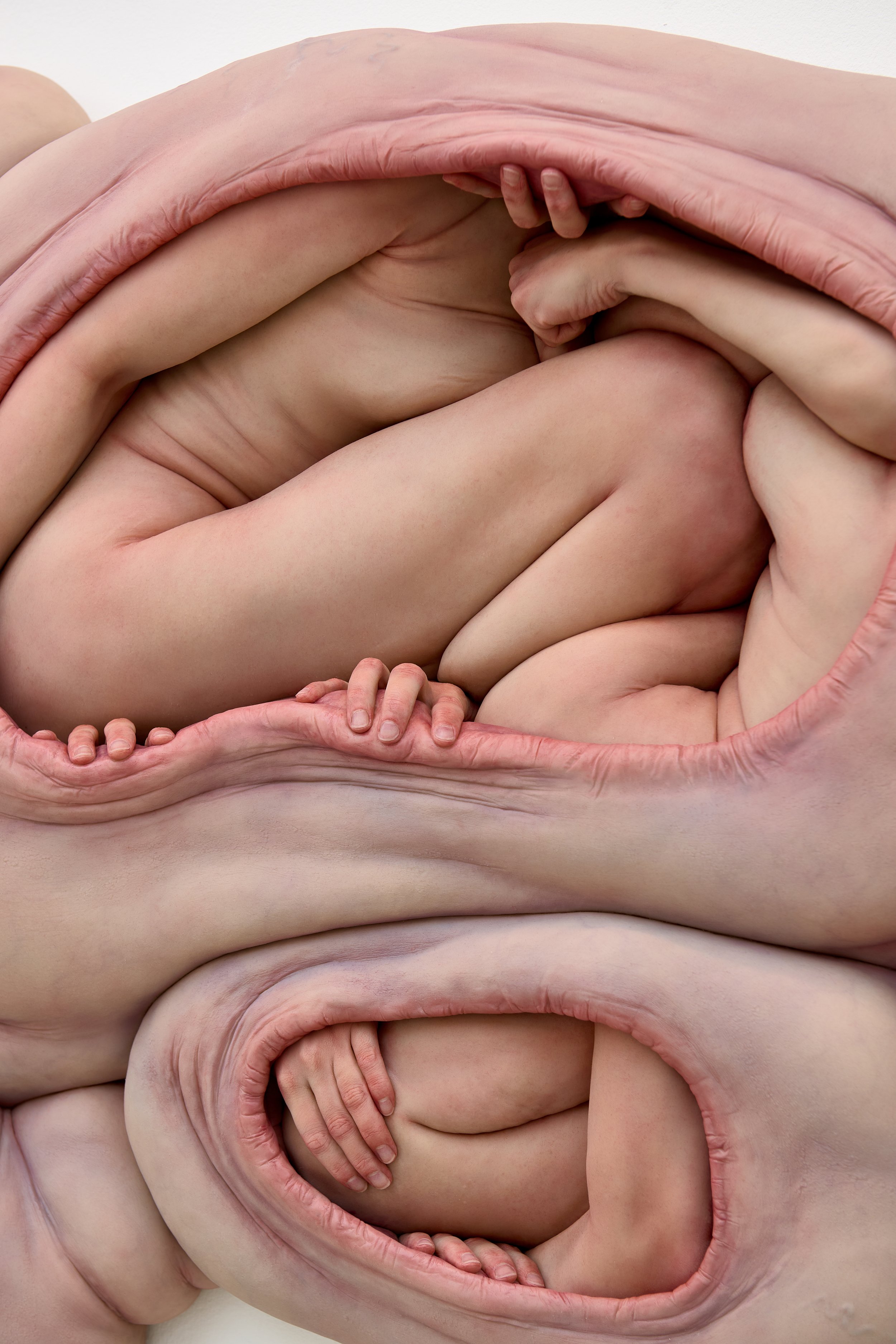
Cocoons, 2025. Silicone, epoxy, 200 x 120 x 30 cm. Photo courtesy of Pasquale Viglione.
Much of your work navigates the grey area at the centre of several oppositions: attraction and repulsion; the desirable and the repellent; the vulnerable and the dominant. These boundaries are readily blurred within your work, which generally examines what can be considered natural and artificial in a world that has become tailored to human existence. What first motivated you to explore these relationships?
They have always interested me. You just search for something that fascinates you, something that drives you forward, and the thing that fascinated me was how we’ve created this division between Man and Nature.
We’ve created all these dividing words – this language and this hierarchy to make sense of this world – but, in reality, aren’t we also part of this nature?
This fascination was the starting point for most of my work. In a general sense, I’m exploring the boundaries of humanity, including the similarities and differences between man, nature, and what we could learn from this Other entity we’ve created. I am also interested in things that are growing ‘wrong’ or out of bounds, and what these life forms can look like.
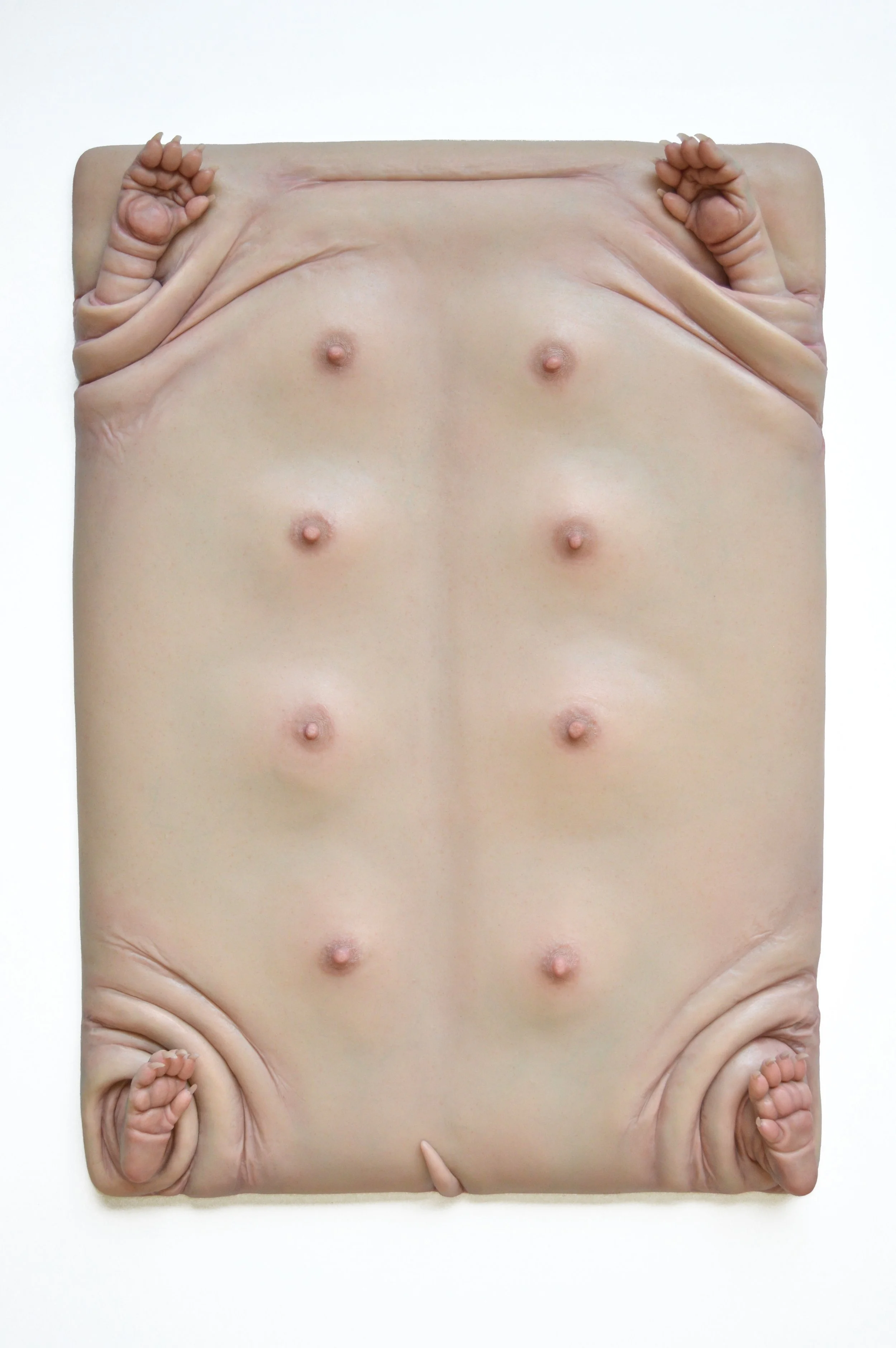
Milk, 2025. Silicone, epoxy. Photo courtesy of the artist.
Was there a specific experience or moment that pointed you towards these oppositions?
My upbringing, I think. My parents, especially my father, were very left-wing, very into climate activism and doing good for the world and making us realise that we’re part of nature: we’re not above it [nature], we’re not gods, we’re also just animals.
“WE’RE NOT ABOVE [NATURE] WE’RE NOT GODS, WE’RE ALSO JUST ANIMALS”
Because I live in the Netherlands, it’s also something that I notice: we don’t have any nature here. When you fly over the countryside, everything is square, there’s nothing natural about our country’s [landscape] and everything is so over well-organised. You just feel it when you’re here.
Some of your recent works seem to encapsulate movement and multiplication, as seen in ‘Cocoons’ (2025), ‘Reaching nexus’ (2025), ‘Symbiotic growth’ (2025), and ‘Growth’ (2023). However, you have also created works such as ‘Totem for mankind’ (2021) and the ‘Tamagotchi’ series (2022) that seem to compress the body into uncomfortable stillness and tightly-packed forms. What was the inspiration for these two bodies of work?
I think of these as two series or presentations of the way things are growing ‘wrong’ in our world. For the first series, I took inspiration from natural forms of growth, such as fungi or sea anemones. They represent natural systems that grow in a harmonious, symbiotic way with the world around them. This is in contrast with the way humanity grows – for example, how we build our technological systems, or the way we extract natural resources – and I think this is a really big way in which we differ from the natural world, but not in a good way. I am questioning why we are better, because, in some ways, we are not better than the natural world. Because of this growth, everything needs to become more efficient, otherwise nothing will work anymore, it does not fit, in a literal and figurative sense.
And so this second series was inspired by this efficiency and the world around me: the cities [we have built], and how we live on top of each other in these building blocks, and how we put animals in boxes for efficiency – all of that. We organise and label everything to try and make sense of this world, and it’s about how we make the world work for us. Everything is constructed, and has to become the most efficient it can be. But there’s nothing that we can do about it.
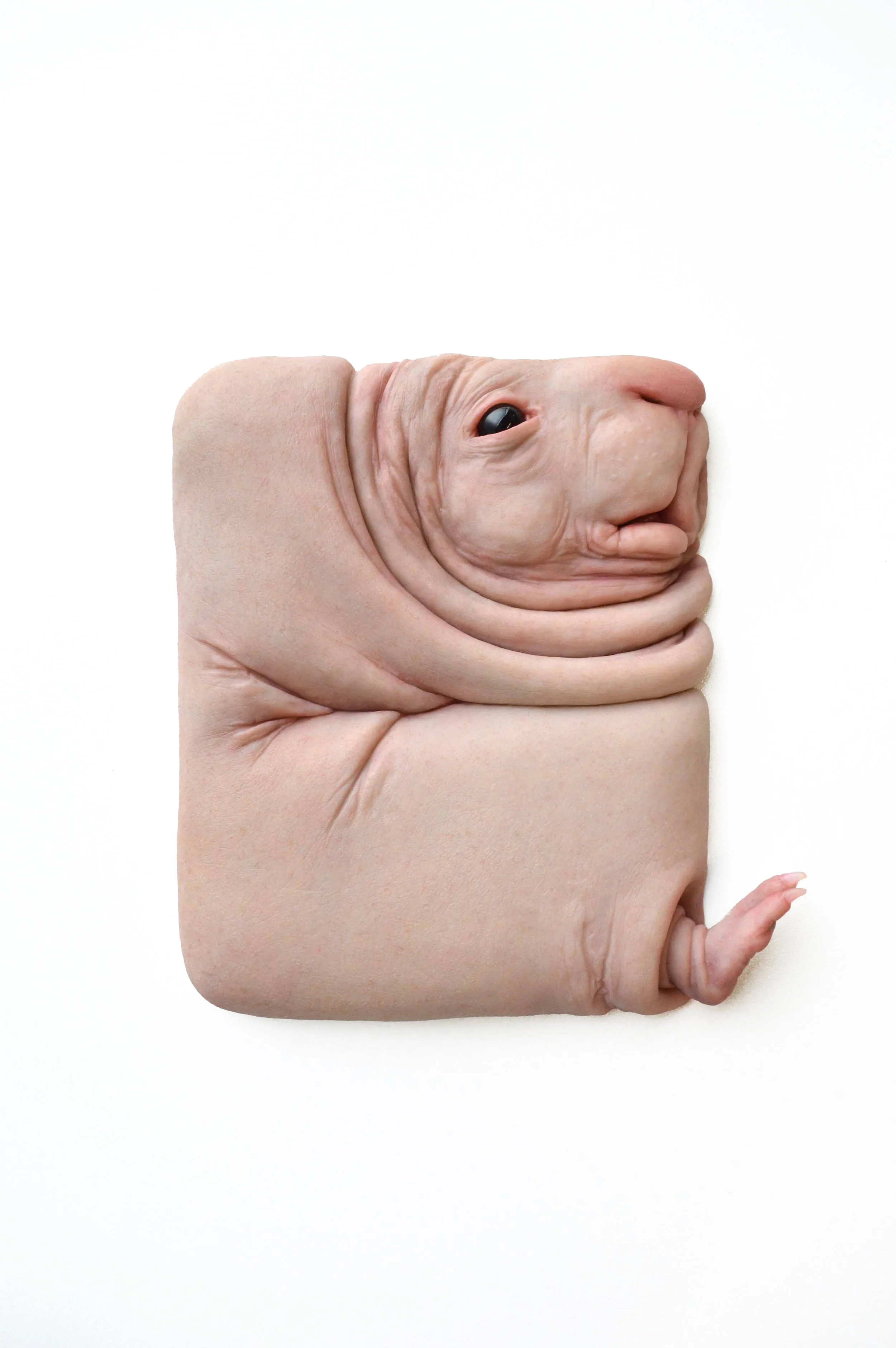
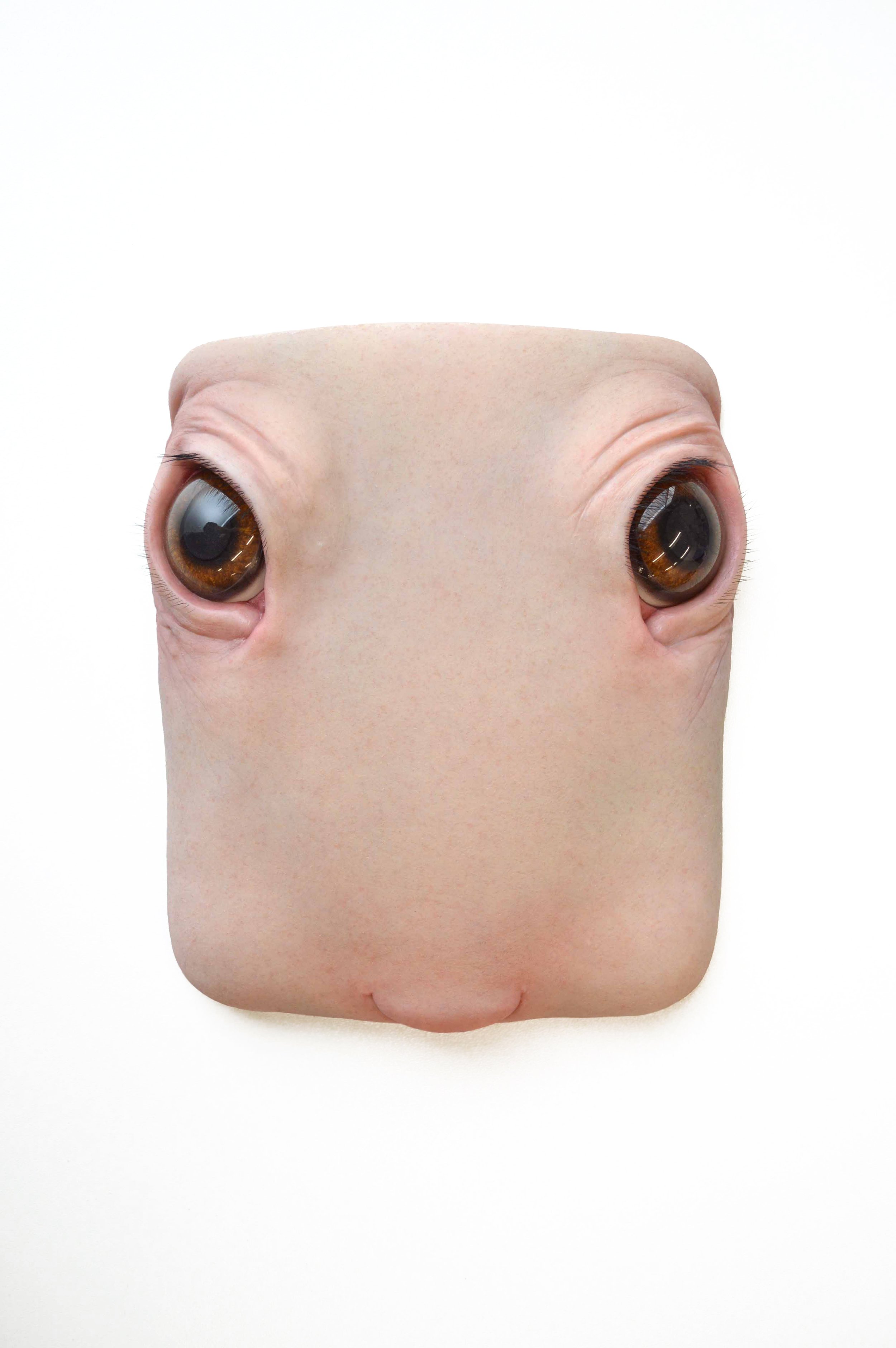
LEFT: Tamagotchi #12, 2022. Silicone, 20 x 25 x 4 cm. Photo courtesy of the artist. RIGHT: Tamagotchi #10, 2022. Silicone, 20 x 25 x 4 cm. Photo courtesy of the artist.
Would you say that your work is a response to this over-organisation?
It’s a visual representation. I wouldn’t call myself an activist; it’s just the way I see the world. Every artist shows the way they see the world, and tries to take the viewer with them into their internal world.
I find it really fascinating that the sculptures featured in ‘Growth’ (2023) have an element of movement to them: a living pulse that breathes with the viewer. Earlier, you described the time-consuming process required to create your works from start to finish. For ‘Growth,’ did you also create the moving, electronic components yourself? And would you wish to continue incorporating movement and similar illusions of animation into future bodies of work?
Yes, I did this course in Arduino, which is easy to learn. After two months I had this very basic knowledge of computer coding: I could connect wires to electronic components and build my own tiny system, but I’m very ambitious, and I want to do more complicated things.
“I’M ALWAYS SEARCHING FOR WAYS TO CREATE AN EVEN STRONGER ILLUSION OF REALITY [...] BY ADDING MOVEMENT, I CAN PLAY WITH THIS BOUNDARY ABOUT WHAT IS REAL AND WHAT IS NOT, TO TRY AND MAKE THESE CREATURES COME ALIVE EVEN MORE.”
I’m always searching for ways to create an even stronger illusion of reality and this world I have in my head, and by adding movement, I can play with this boundary about what is real and what is not, to try and make these creatures come alive even more. It’s very magical, but it takes a lot of time. I’m still searching for ways to incorporate [movement] into my work, it’s just a complicated process on top of another complicated process. So, I don’t know, maybe I will try to find ways to work together with other artists… I don’t know yet, but I know I want to do it more in the future.
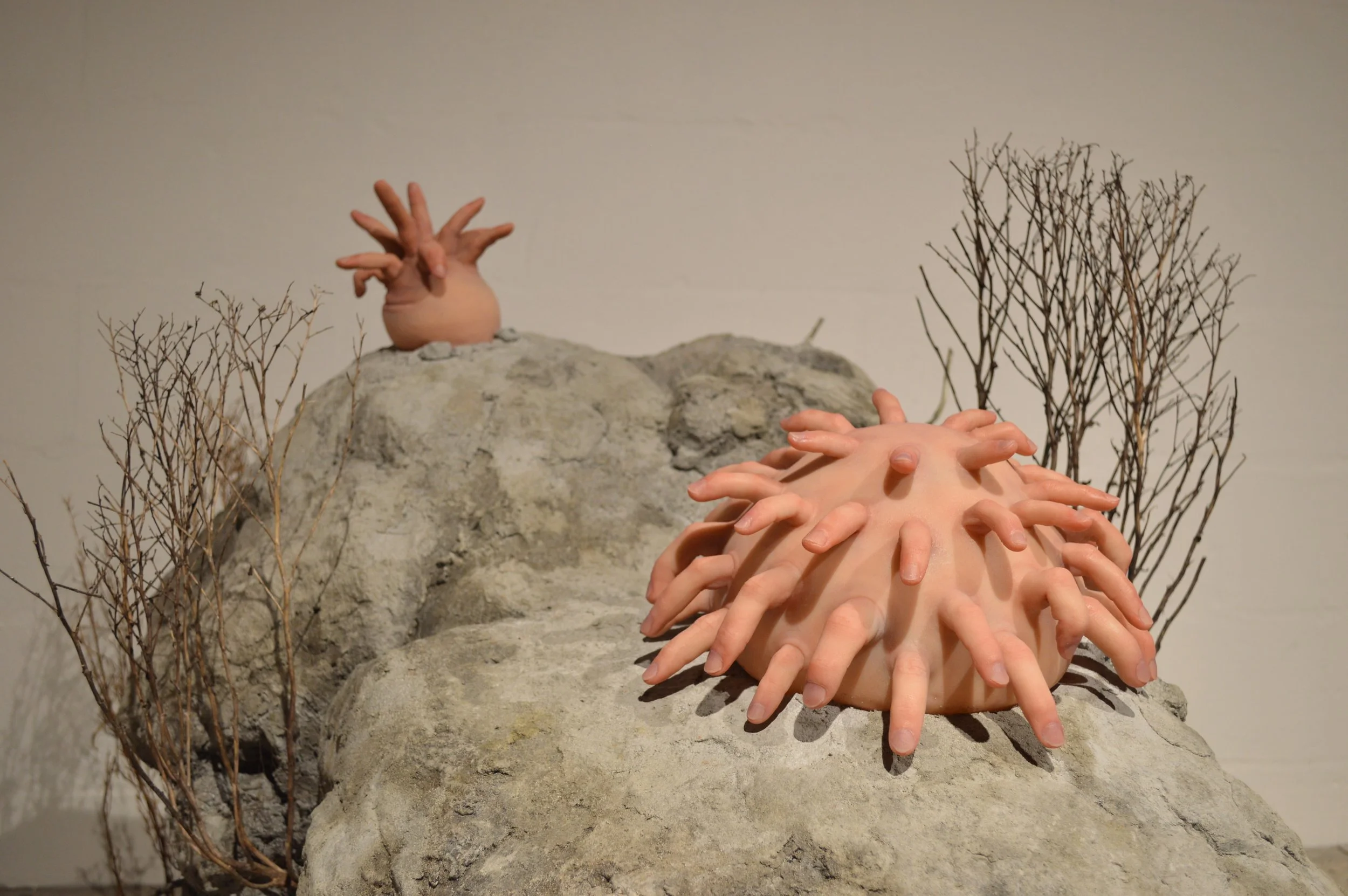
Growth, 2023. Kinetic ‘breathing’ silicone organisms, concrete, epoxy, silicone, wood, electronics, 100 x 90 x 70 cm. Photo courtesy of the artist.
Recent exhibitions of van Breevoort’s work include her solo show ‘Growth’ at NL=US Gallery in Rotterdam, and the group show ‘Standing on the Shoulders of Giants II’ at Saatchi Gallery in London.
To learn more about van Breevoort’s work, you can view her website:
https://margrietvanbreevoort.com/.