


MAMA Salon, Bethnal Green
TEXT BY ANA ESCOTO
Three States of Milk, state three, 2021. Photo by Daniel Jackont. Courtesy of MAMA and the artist.
We come into this world with a breath, a scream that loudly announces our presence. As long as we are alive, this endless cyclical action propagates us with an internal rhythm that connects us to the ether. We remain in this realm for as long as we breathe; it is our first and final act in this world. But breathing is not limited to humans nor animals, and Maayan Sophia Weisstub believes that objects are more alive and sentient than we give them credit for.

Installation shot. Photo by Daniel Jackmont. Courtesy of MAMA and the artist.
Every artefact of our material culture has a history. The objects we own have a meaning beyond their simple utility because we humans are affectionate. Forming emotional bonds with our surrounding space is a natural part of existing within the confines of intimacy. Weisstub extrapolates this notion to narrate her own story and to raise questions about how these objects can hold endless narratives, from abuse to affection, to tales of grief and personal journeys through pain.
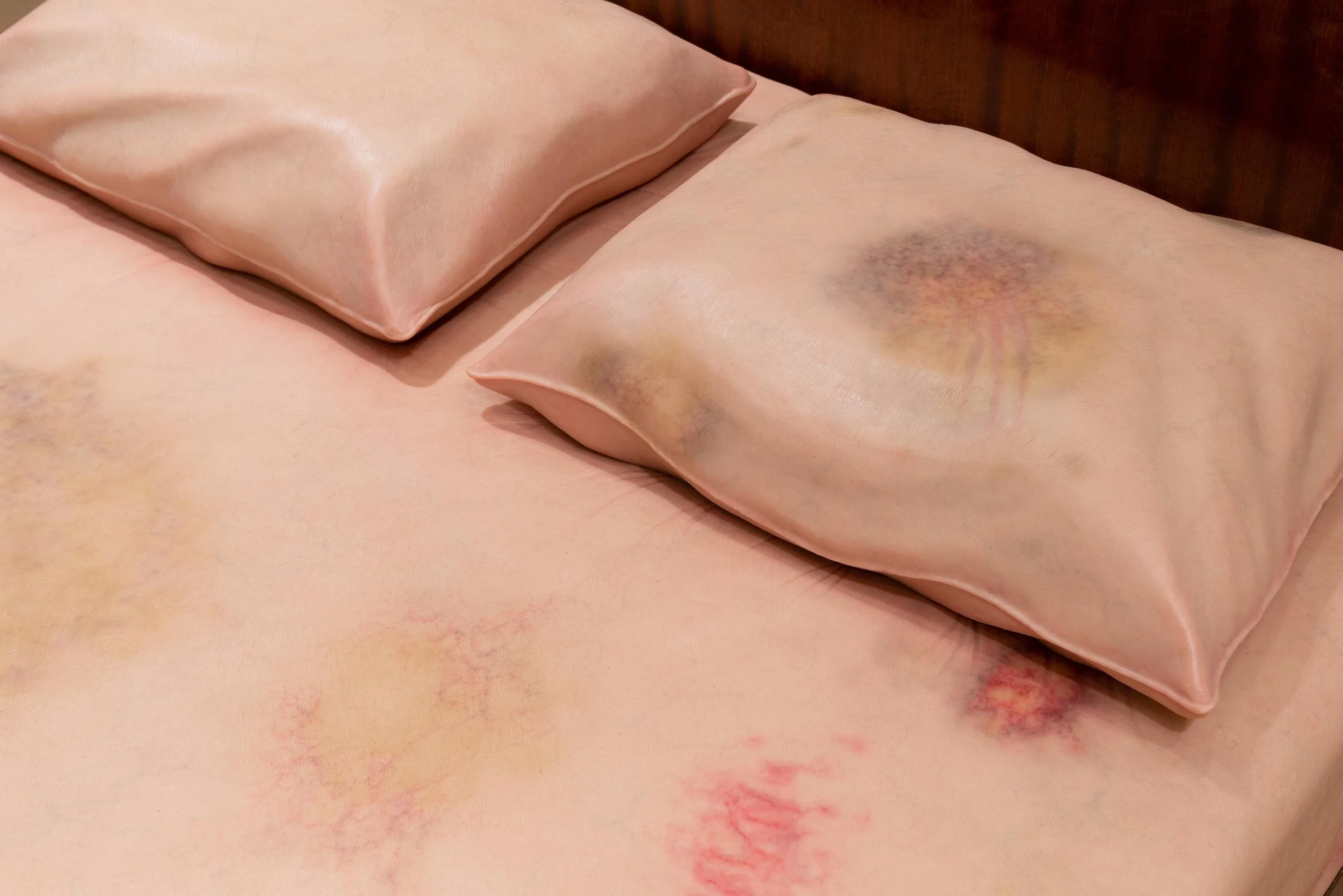
Detail from The Bed, 2022. Photo by Daniel Jackmont. Courtesy of MAMA and the artist.
She presents her sculptures and photographs in a new venue occupied by the women-focused curatorial collective MAMA Salon. Nestled on the long stretch of Bethnal Green Road, this space adds a new layer of meaning to the show. Constructed like a house, it begins with a bedroom whose bed is made of flesh and covered in bruises. The bed faces the window directly onto a high street, allowing passersby to glimpse into the space, often mistaking it for a furniture store but gaining a completely different perspective when pausing to look properly.

Dine with me, 2022. Photo by Daniel Jackmont. Courtesy of MAMA and the artist.
The entire space exists at the axis of a traditional white-cube gallery and a regular apartment in London. Once you step in, you see a closet area and a kitchen, all a continuation of the show. It is precisely from this intersection that Weisstub plays with all the objects. They are seemingly normal, everyday items, but once you look closely, everything changes. The bed with its bruises alludes to the tragedies that can occur in this space meant for rest. Its covers are a replica of skin that has been hurt, both emotionally and psychologically. Weisstub invites us to question how the safety we feel in intimate spaces can be violated by memories of pain.

From Dine with me, 2022. Photo by Daniel Jackmont. Courtesy of MAMA and the artist.
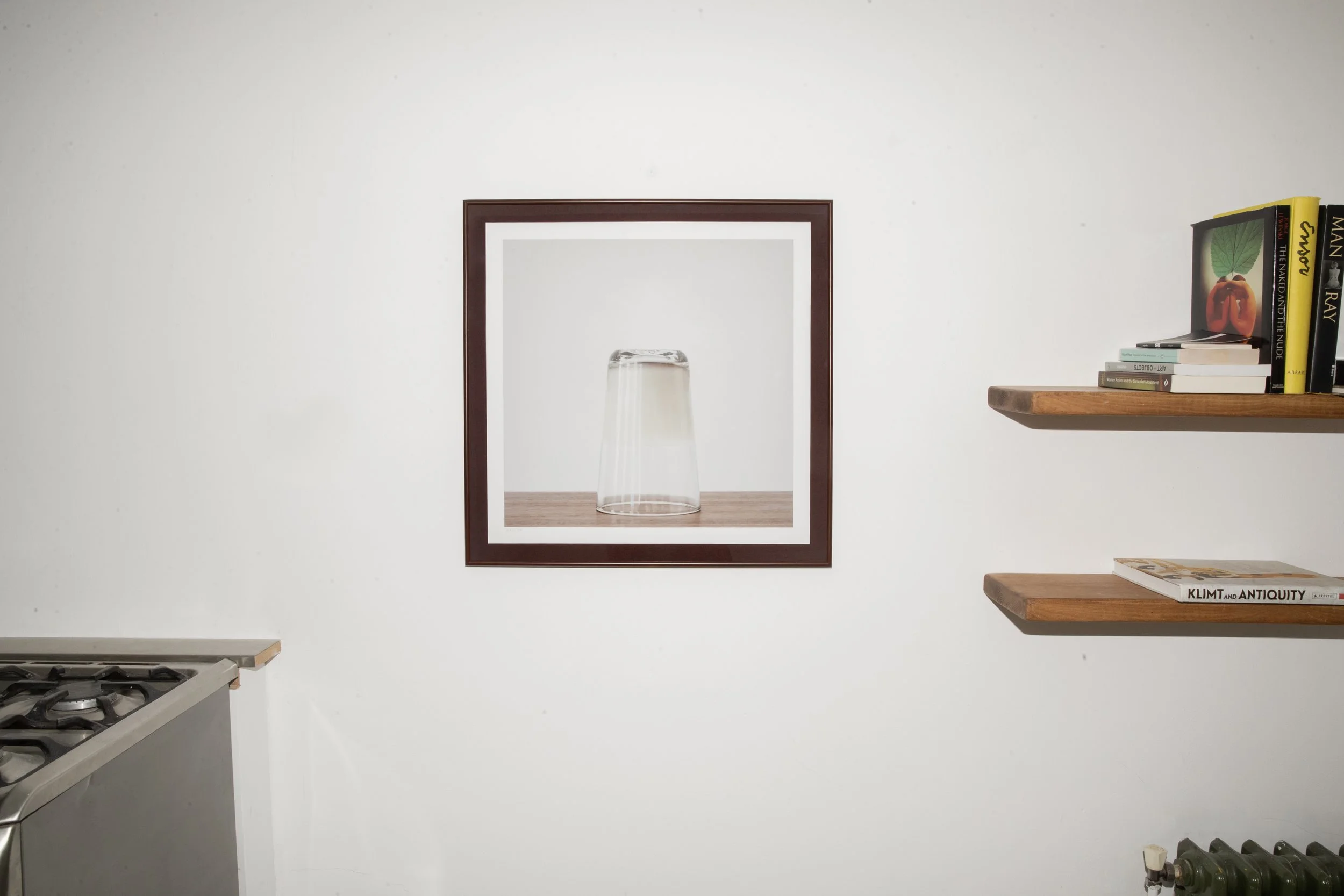
Furthermore, her digital collages hang on the walls - breakable objects pictured in a very subdued, almost Flemish manner. A plate, a glass, a vase, all seemingly normal, stand still and stoic, but upon close inspection, one observes they have been cracked from top to bottom, down the middle. This crack—as thin as a hair strand—makes it impossible for the objects to remain functional. This alludes to the cracks we all hide in plain sight, our pain visible only to those willing to look with care. The theme of impossibility also carries through the rest of the show. There is a table next to the kitchen that can never be sat at, as the chairs are welded together, making it impossible to sit.

Let There Be Light, 2024. Photo by Daniel Jackmont. Courtesy of MAMA and the artist.
Returning to the act of breathing, Weisstub has made the lightbulbs hanging in the clothes rack “breathe”. Made of silicone and powered by an unknown whirring mechanism, they mimic the motion of a diaphragm contracting and expanding to the rhythm of a breath. Seeing an inanimate object perform this primal act renders it completely defenseless and engenders empathy. With this, she alludes to the beginning of life and the inevitable death that will bring it to an end.