

REVIEW: Good Eye projects 2026 at Saatchi Gallery
Text by Lizzie Barratt
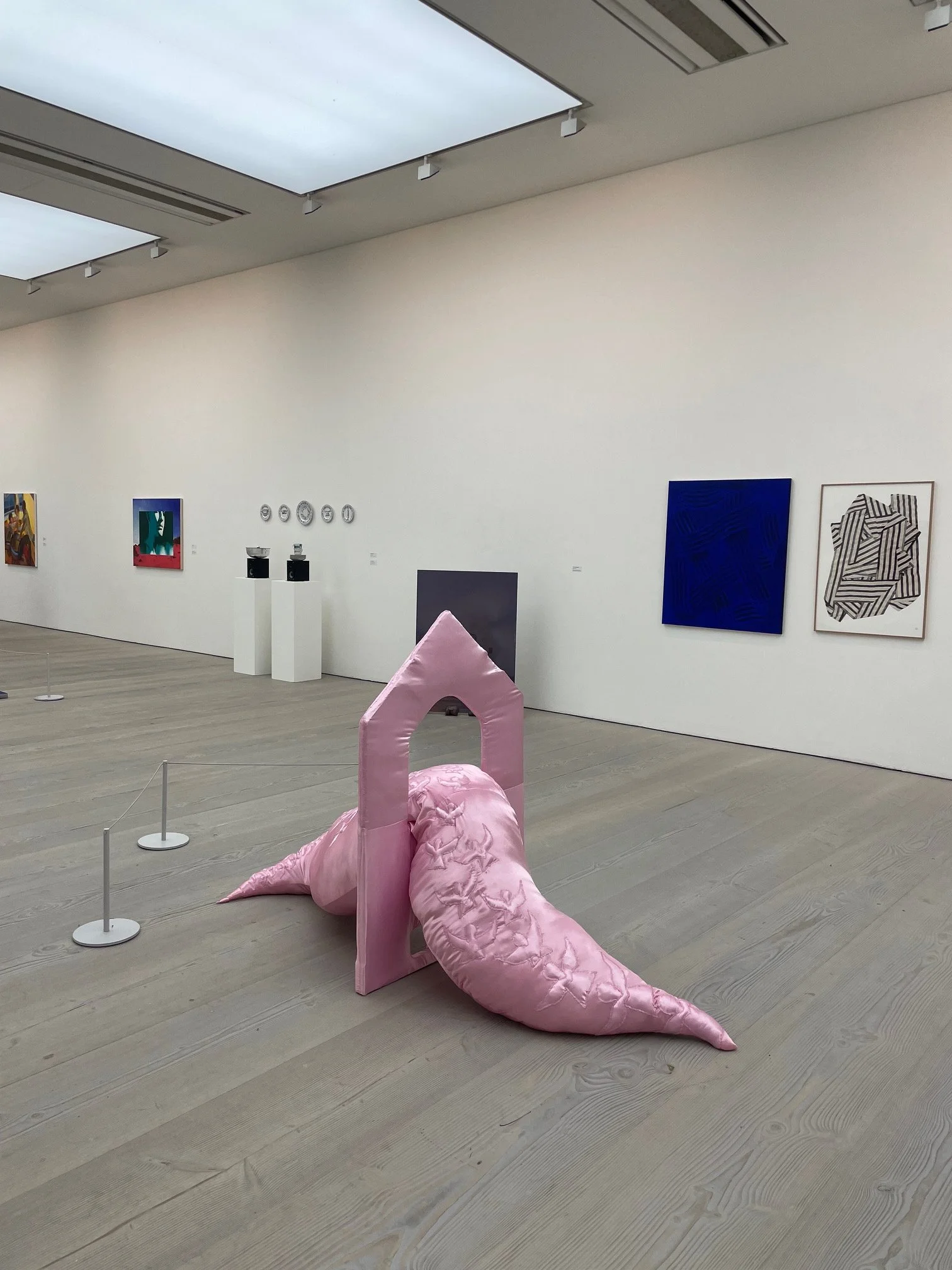
Installation view, Good Eye Projects 2026, Saatchi Gallery. Image courtesy of the writer, 2026, © Saatchi Gallery.
Human life structures itself through systems of categorisation, and so too does art; -isms and thematics shaping the way we comprehend visual culture. Exhibitions tell us what to see, a conceptual hide-and-seek for meaning along a predetermined curatorial narrative. This is often necessary, remove this path and even the most seasoned viewer is left disorientated in the kaleidoscope expanse of contemporary art practice. However, lose your footing and the landscape of our own unguided interpretation may turn to a sea of glorious possibility — art can be anything, and what we can glean from it is infinite and beautifully subjective.
It is precisely this sprawling array of what art is, and, crucially, what it can be, that is celebrated in Good Eye Projects’ group exhibition at Saatchi. Eighteen exhibiting artists are grouped together by virtue only of their involvement with GEP – a grassroots, artist-led residency programme offering participants free studio space. A snapshot of London’s vibrant art scene, the exhibition teems with plurality, the works on display unified only by shared circumstance and collective energy. Multifarious objects fill the gallery; paintings hang on walls, and sculptural forms squirm across the floor, opening space and then dividing it again — active players in the gallery crowd despite their physical stasis.
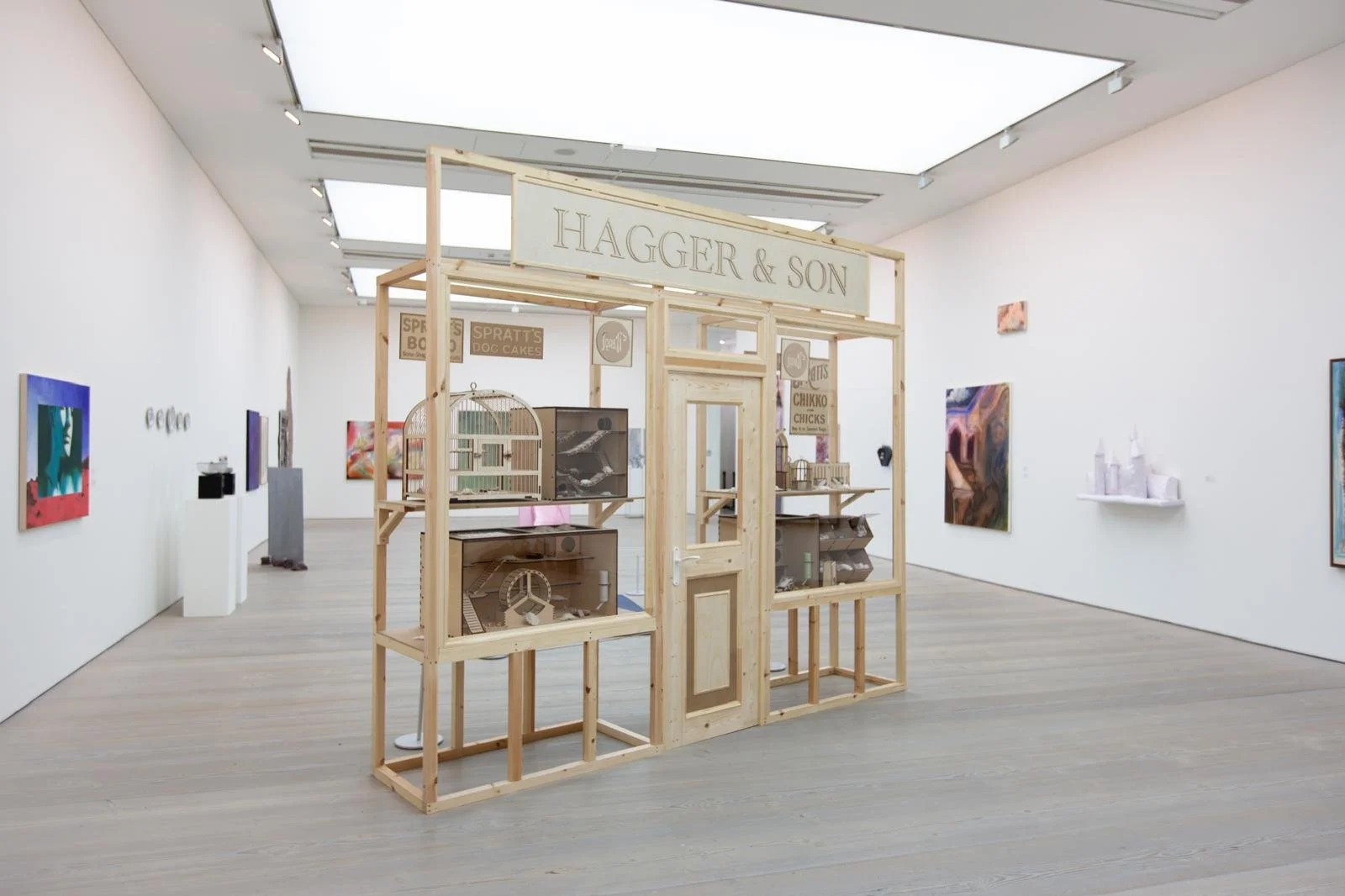
Rachel Mortlock, Hagger & Son, 2025, mixed material sculpture. Image courtesy the Nicholas Constant, 2026. © Saatchi Gallery.
The opening act to this unfolding artistic cabaret, Rachel Mortlock’s Hagger & Son is unapologetic in its command of space. The work reconstructs a Victorian pet shop façade, supposedly well-stocked with the mass-manufactured dog treat Spratts. However, look closer and inside wriggle uncanny substitutes. Everything here is a reproduction — creepy-crawlies, pet food and popular chocolate treats all cast in pastel-coloured jesmonite. Revealing the mechanics which underscore modern life, the work echoes Baudrillard’s theory of the simulacrum that ‘reality’ has now become only ‘‘that which is always already reproduced’. Signifiers of both human and animal consumption collapse into one another within the skeletal storefront, revealing to the viewer the constructed stage on which the capitalist illusion plays out.
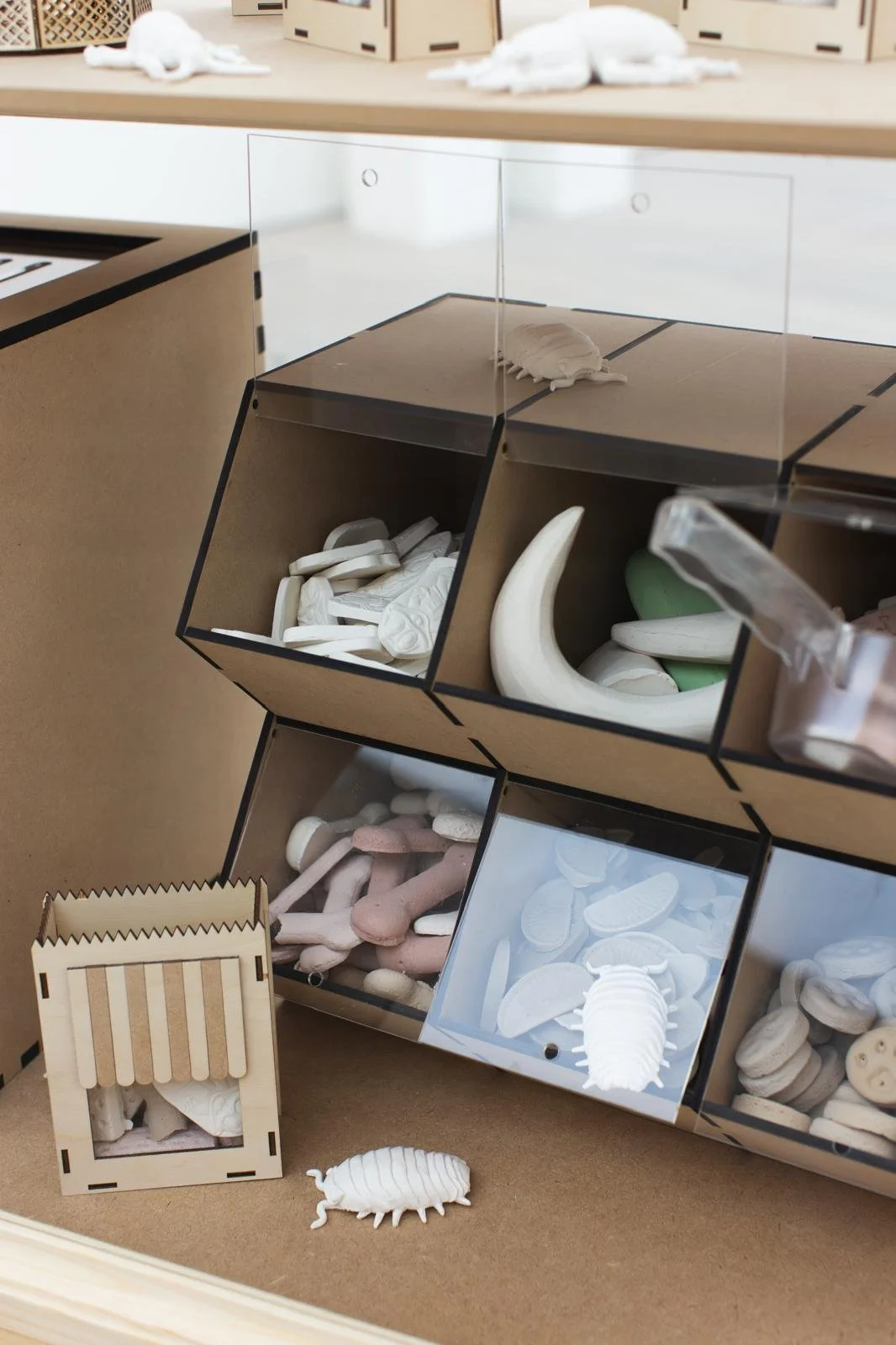
Rachel Mortlock, Hagger & Son, 2025, mixed material sculpture. Image courtesy the Nicholas Constant, 2026. © Saatchi Gallery.
This is not to say that the piece reads as a purely disinterested postmodern commentary; rather, Hagger & Son sings with a comforting nostalgia. Named after her late Grandfather the installation carries a personal meaning for Mortlock, tenderness emanating from its MDF frame. Meticulously crafted from everyday materials, it explores the emotional residue embedded for many of us even within mass-produced objects. Amidst the replicating wheel of consumption, Mortlock reminds us, we are still human after all.
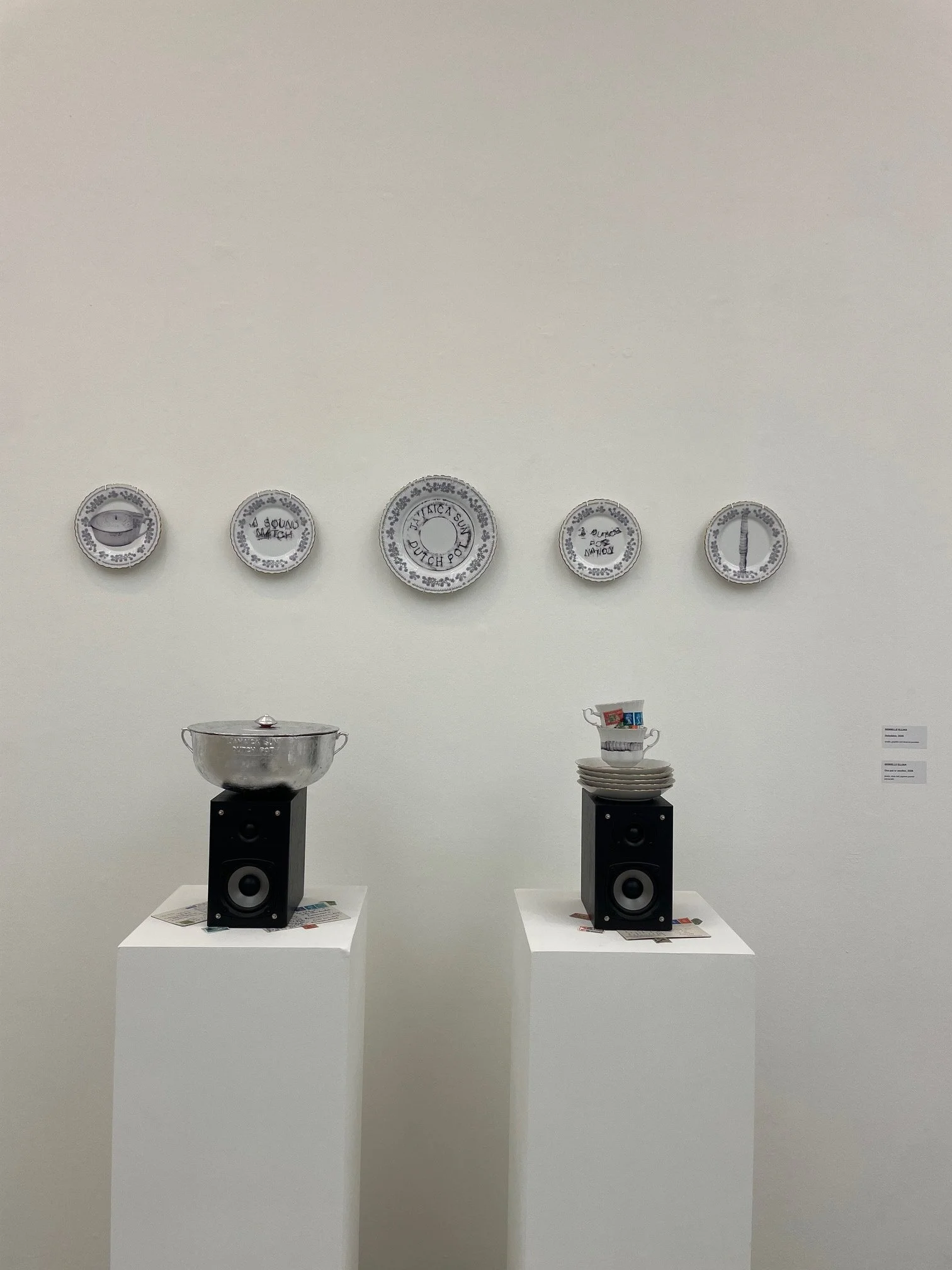
Derrelle Elijah, One Pot or Another, 2026. Acrylic, graphite and decal on porcelain. Image courtesy the writer, 2026. © Saatchi Gallery.
Whilst any attempt to surmise the show thematically would be futile, a sense of the past haunts the exhibition. Perhaps this is emblematic of our contemporary crisis; as a nostalgic yearning countered Victorian industrialism so now, in our era of technological revolution do we perhaps reach for a more stable footing in our own histories. Derrelle Elijah’s One Pot or Another explores this on a global scale. The Dutch pot is utilised to interrogate how domestic objects carry traces of migration and colonial histories, connecting personal memory to global narratives.
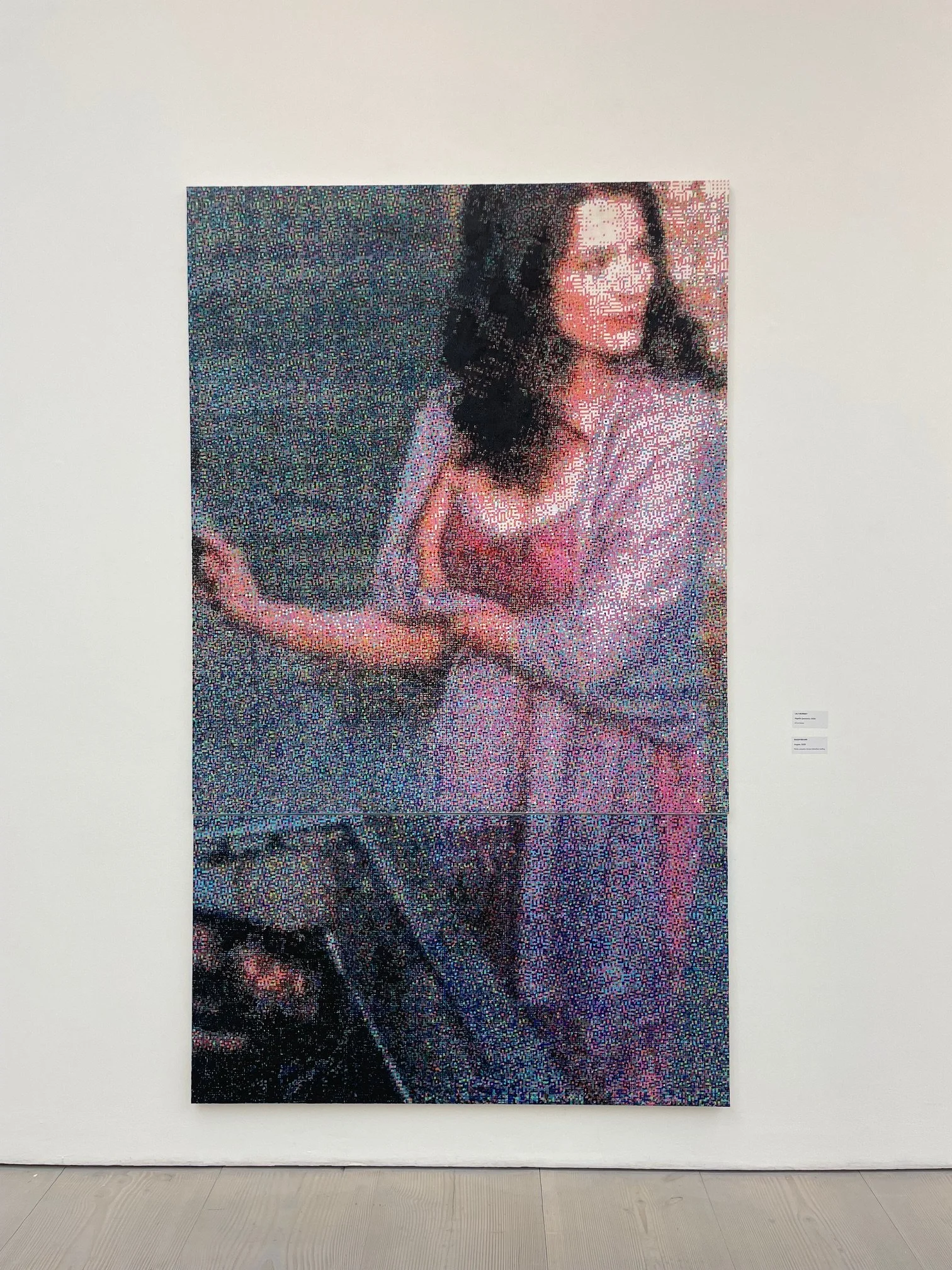
Lily Bunney, Nigella (pensive), 2025. Watercolour pencil on paper. Image courtesy the writer, 2026. © Saatchi Gallery.
Paintings feature prominently in the show, ranging from Lulu Wang’s abstractions to the tender figuration of sisterhood in Roudhah Mazrouei’s The Rest’. It speaks to the expansiveness of the medium that the expressionist stokes of Harriet Gillet’s One Step Closer reside moments away from the technical precision of Lily Bunney’s Nigella (pensive).
Created to be most legible through a phone-screen, here pointillism meets bendo dots, the pixelated image prompting reflection on the blurring of lived and digital experience. The gloriously sensationalist representation of Nigella in the hallowed halls of her ex-husband’s gallery also prompts larger questions around gender relations and celebrity, and the role of visual culture in their construction.
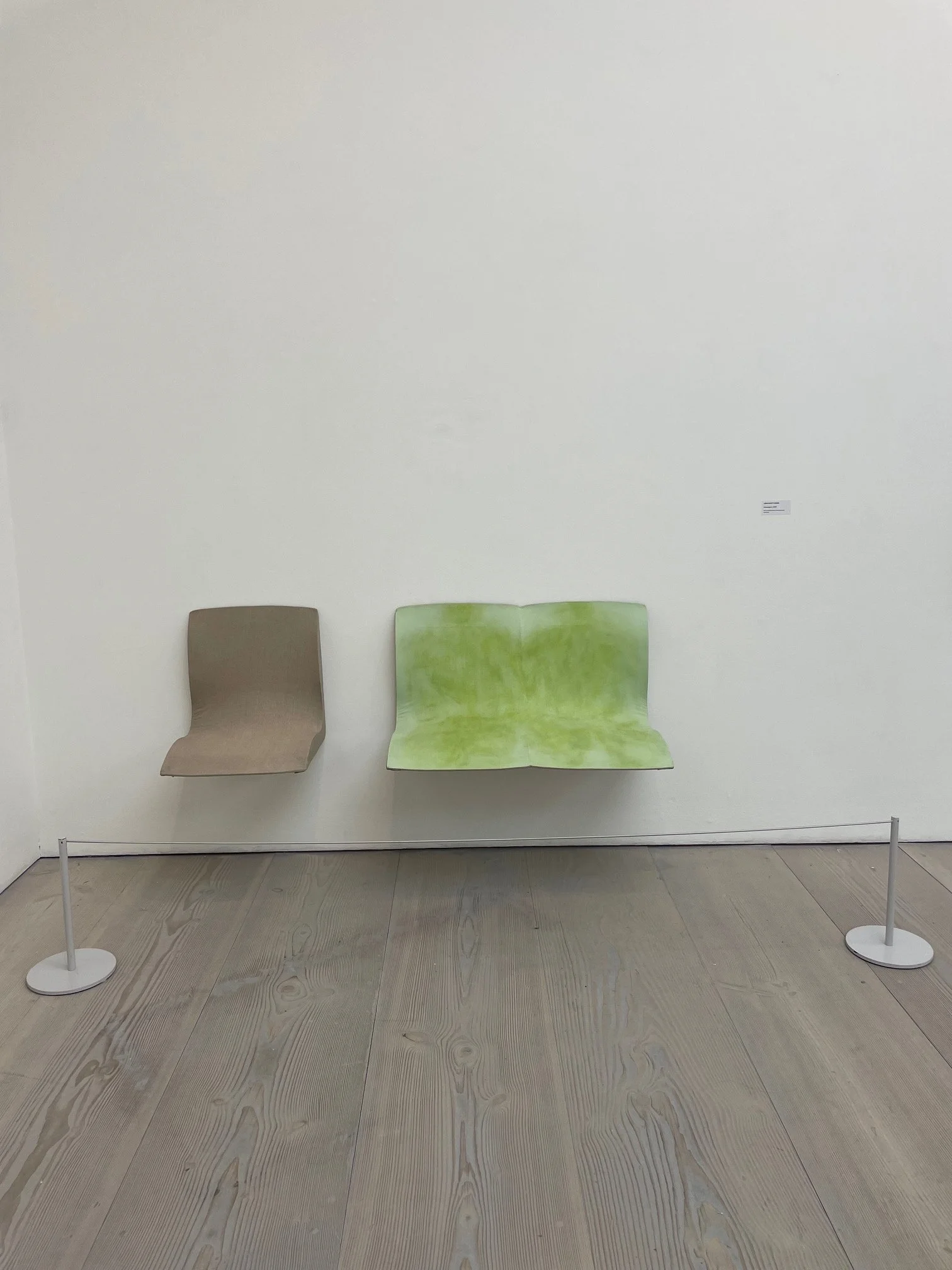
Leon Scott-Engels, Passengers, 2025. Oil on Stretched Linen, Shaped Wooden Stretchers. Image courtesy the writer, 2026. © Saatchi Gallery.
Not all of the paintings in the show behave so well as to remain where we would expect. In Leon Scott-Engels Passengers, canvas is re-appropriated as upholstery, stretched to line three legless chairs. Two are joined, the painterly traces of a pair of connected human bodies visible through the soft green tones which cloud their surfaces. Stretching boundaries of figurative painting the work is profoundly expansive in both technicality and the emotional landscape it presents. Despite being physically empty, touch and bodily presence are palpable, a tender empathy for human connection which is quietly radical.
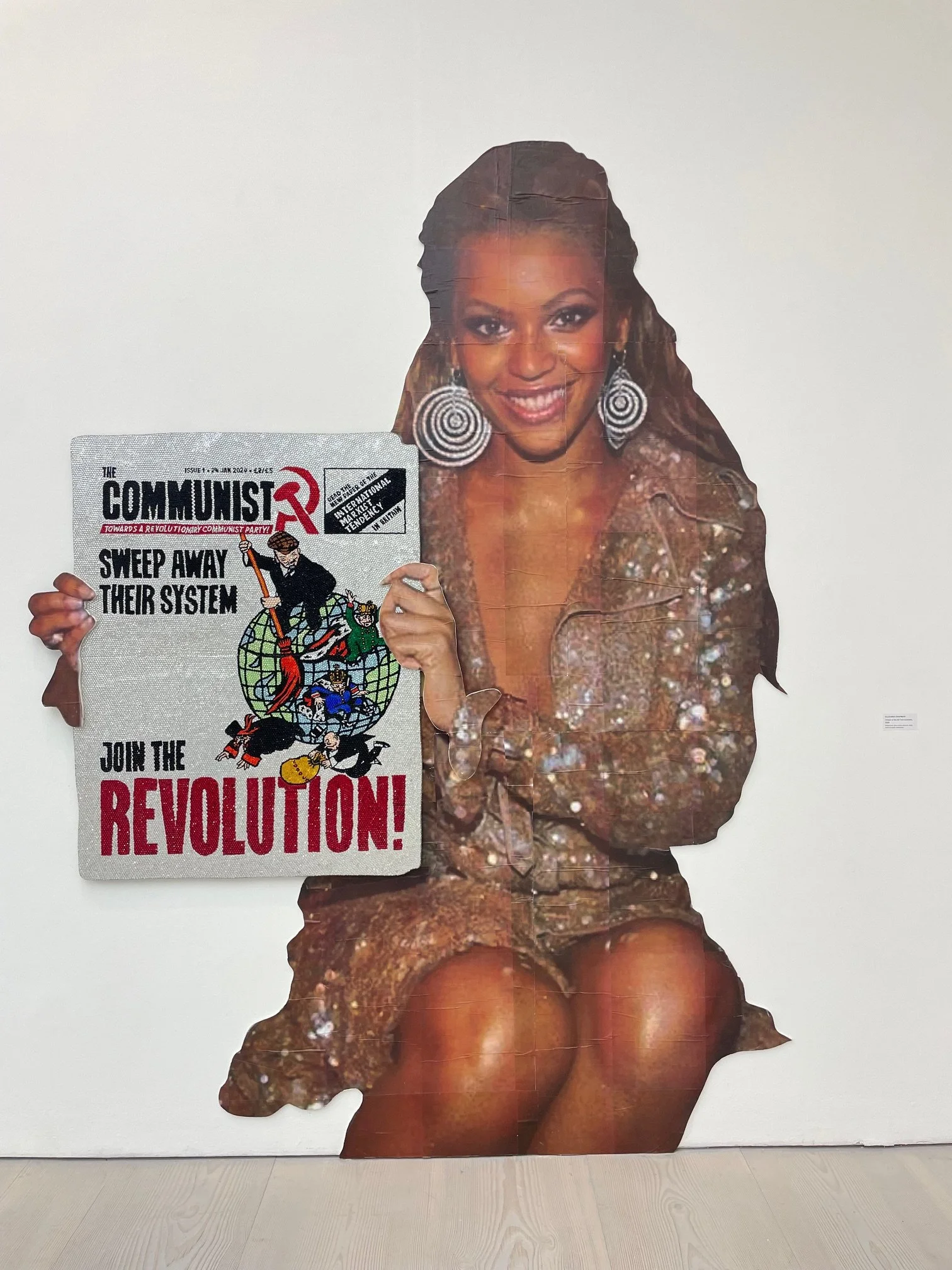
Eleanna Chapman, Attack of the 50 Foot Comrade, 2026. rhinestones, glue, acrylic, plywood, inkjet prints on paper, wheatpaste. Image courtesy the writer, 2026. © Saatchi Gallery.
All of the works exhibited present a visual radicality in varied registers, yet most explicit in its political agenda is Eleanna Chapman’s Attack of the 50 Foot Comrade. A colossal inkjet print of Beyonce smiles down from the wall, a rhinestoned issue of ‘The Communist’ in her hands. Chapman is a revolutionary communist, her politics inextricable from her art, and here she imagines a reality in which Queen B herself rallies the cry to ‘join the revolution!’. The piece maligns boundaries of ‘fine art’ through its materiality, disregarding class politics inherent within questions of ‘taste’. By repurposing images from pop-culture Chapman undermines capitalist propaganda, interrogating the revolutionary power inherent within a shared cultural aesthetic.
All works on display here are given room to breathe, but look around and one is encouraged to nurture dialogues between them. They are both bookends and open doorways, expansive in their vision of art and modern society. This fostering of connection mirrors the ethos of connectivity GEP’s residency aims to achieve, a communal impulse refreshing in an art world so often marked by elitism. All the artists take up space in this most prestigious of galleries, signalling not assimilation but a vision of radical possibility in which meaning is all of ours to create.
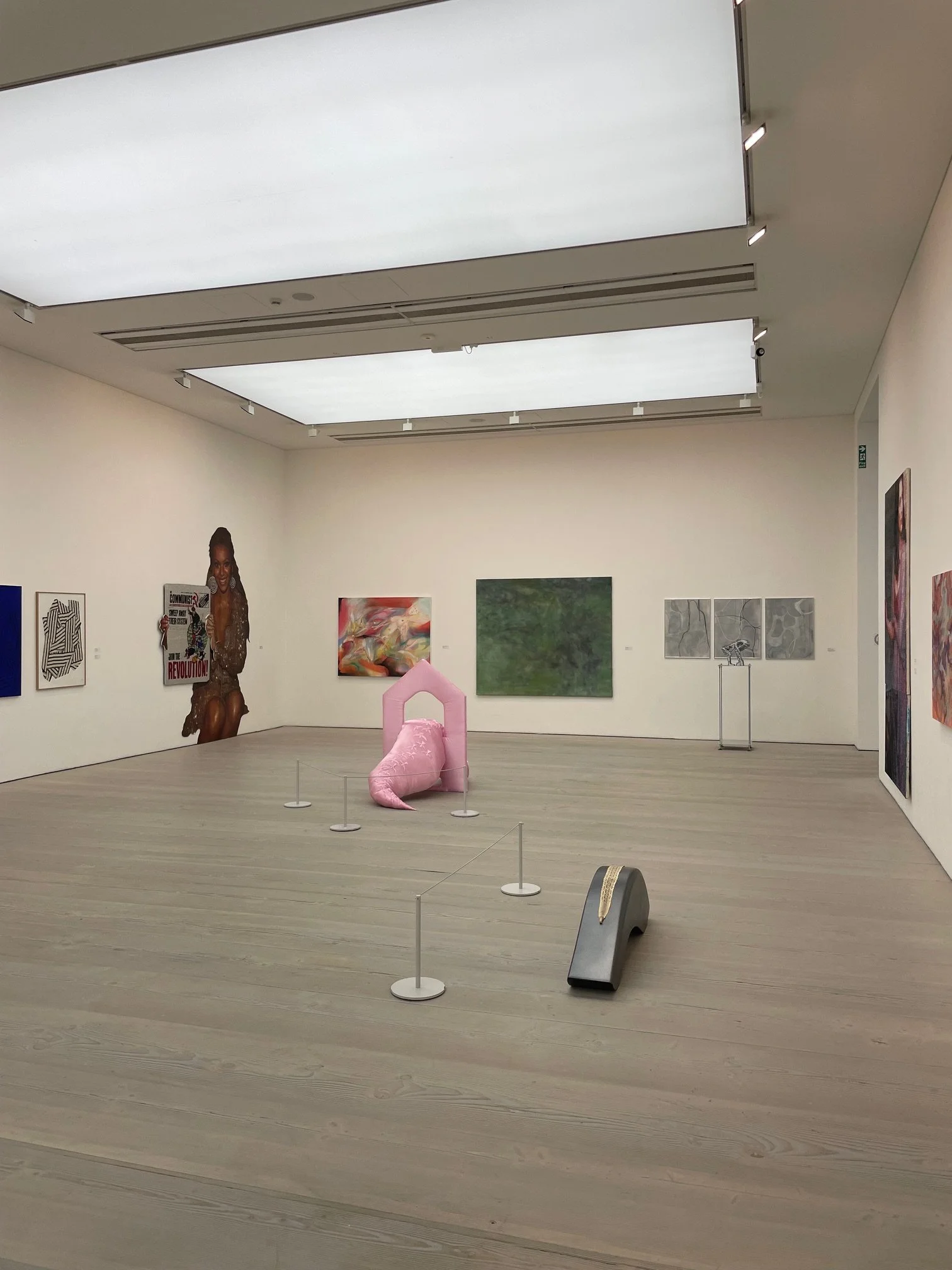
Installation view, Good Eye Projects 2026, Saatchi Gallery. Image courtesy of the writer, 2026, © Saatchi Gallery.